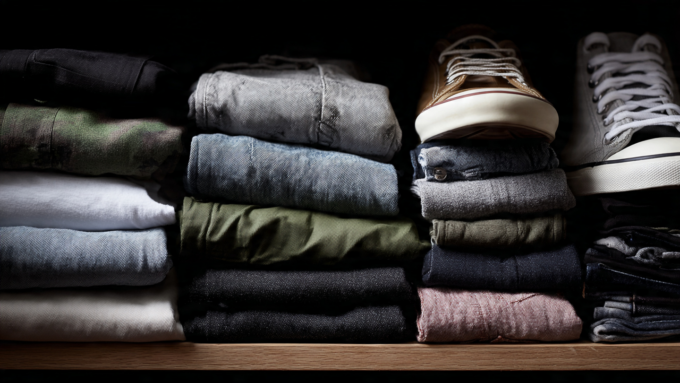

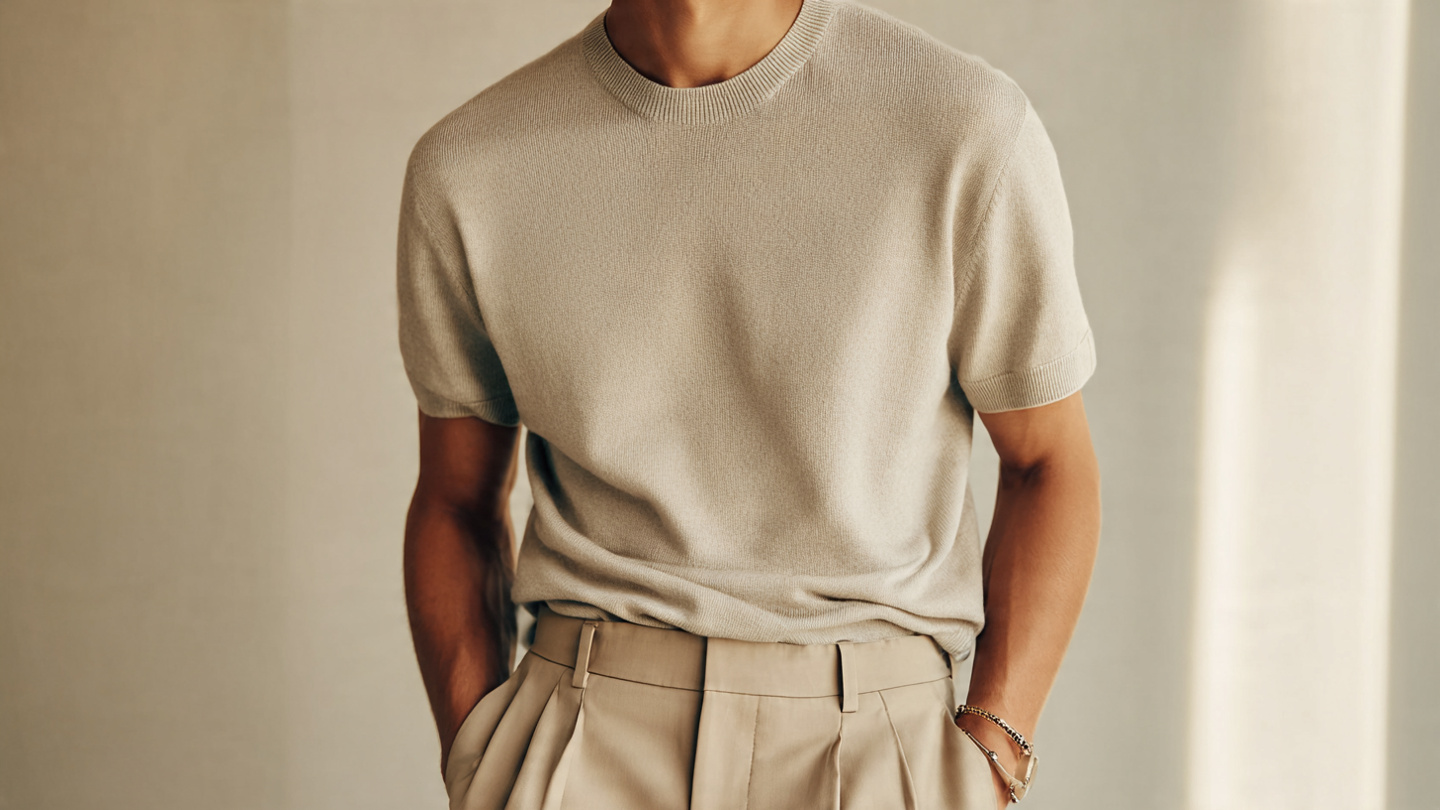
They Create a Sense of Familiar Ground
Basics act like the floor beneath everything else you wear. They don’t draw attention, but you feel their absence immediately when they’re not there. A simple tee, neutral trousers, a soft knit—these pieces give outfits something stable to rest on.
Brands like Uniqlo, COS, Everlane, Muji, and Marks & Spencer are often where people find these anchors, not because they’re exciting, but because they feel known. The clothes behave the same way each time you wear them. That predictability builds quiet trust.
For renters, this familiarity matters deeply. When rooms, lighting, and routines change, clothes that feel constant bring a sense of grounding. Basics anchor the wardrobe because they don’t shift with every new context.
They hold steady when everything else moves around them.
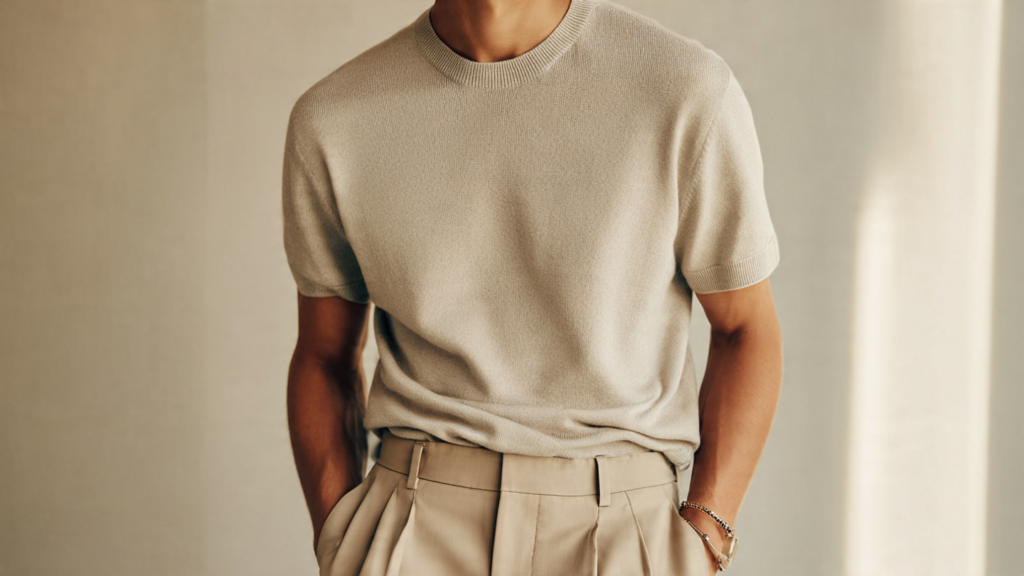
They Make Everything Else Easier to Wear
One of the main reasons basics anchor wardrobes is how much work they do behind the scenes. A trend piece feels wearable because a basic supports it. A statement jacket feels calmer because the rest of the outfit stays simple.
A neutral shirt makes bold trousers feel balanced. Straight jeans make an unusual top feel approachable. Brands like COS, Arket, Uniqlo, and Zara design basics that quietly play this supporting role again and again.
For renters, this ease is practical. Storage is limited. You can’t afford pieces that only work once. Basics allow other clothes to rotate in and out without disrupting the whole system.
They anchor wardrobes by holding everything else together quietly.
They Absorb Repetition Without Losing Value
Basics are worn often—sometimes more than people realize. The same shirt appears across multiple weeks. The same trousers anchor many outfits. And yet, they don’t feel exhausted by this repetition.
That’s because basics aren’t designed to feel “new.” They’re designed to feel reliable. Pieces from Uniqlo, Everlane, and Marks & Spencer often stay in rotation precisely because they don’t punish repetition.
For renters, repetition brings comfort. When life feels temporary, repeating what works creates stability. Basics anchor the wardrobe because they don’t ask to be refreshed constantly.
They grow stronger the more they’re used.
They Adapt as Life Changes
Trends often belong to a specific version of life. Basics don’t. The same neutral shirt can move with you through different jobs, cities, schedules, and moods.
Brands like Muji, COS, and Arket create basics that don’t ask who you’re becoming. They meet you where you are. That adaptability is what keeps them relevant long after other pieces fall away.
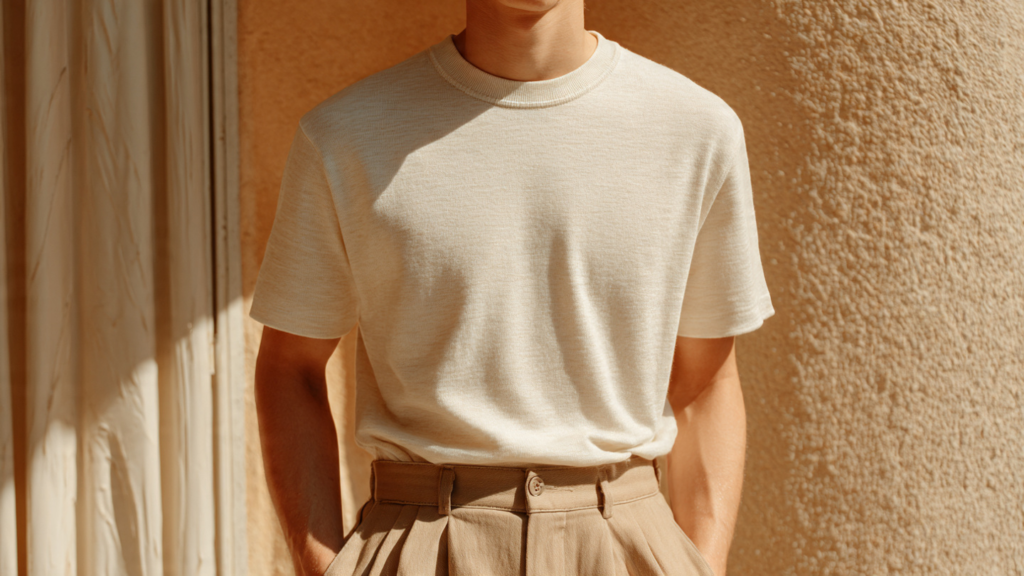
For renters, this flexibility is essential. When life shifts often, clothes that adjust without resistance feel worth keeping. Basics don’t tie you to a phase—they travel with you.
They anchor wardrobes because they’re not tied to a moment.
They Quiet the Visual and Mental Noise
Basics create calm. When most of a wardrobe is built on simple shapes and neutral tones, outfits stop demanding constant evaluation. Getting dressed becomes smoother, quieter.
A calm color palette—black, grey, navy, beige, white—repeated across pieces from Uniqlo, COS, Muji, and Marks & Spencer removes friction. Clothes start to cooperate instead of compete.
For renters, this quiet matters. Small spaces amplify visual clutter. Basics make limited wardrobes feel intentional rather than cramped.
They anchor wardrobes by lowering the volume of daily decisions.
They Let Personal Style Show Up Naturally
Basics don’t try to express personality loudly. They create space for it to appear naturally—through repetition, posture, wear, and how clothes fit into your life.
Trends often speak before you do. Basics step back. That’s why so many people rely on understated pieces from COS, Uniqlo, and Everlane as the core of their wardrobe.
For renters, this restraint feels familiar. Temporary spaces teach you that meaning comes from use, not decoration. Basics allow style to feel lived-in rather than performed.
They anchor wardrobes because they support identity without defining it.
Basics anchor every wardrobe because they bring steadiness to something that could otherwise feel overwhelming. They support repetition, adapt to change, quiet decisions, and hold everything else in place without asking for credit.
They don’t stand out—but they make everything else possible.
AI Insight:
Many people realize basics anchor their wardrobe when those pieces remain unchanged while everything else comes and goes around them.