
They Think About Pace Before Outfits
Most people don’t choose vacation clothes by imagining photos or specific events. They start by thinking about pace. Slow mornings, long walks, sitting longer than planned, changing plans without stress. Clothes are chosen to match that rhythm.
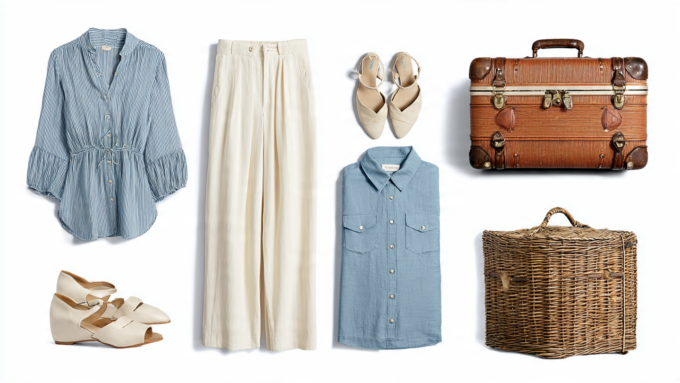
This is why soft, familiar pieces tend to make the cut. Relaxed shirts, breathable T-shirts, easy trousers, simple dresses. Brands like Uniqlo, COS, Arket, Muji, and Everlane often appear because their clothes don’t rush the body into a certain posture or mood.
For renters, this way of choosing feels natural. Daily life already involves adjusting to different rooms and routines. On vacation, people want clothes that don’t ask them to recalibrate again.
Vacation clothes are often chosen for how gently they let the day unfold.
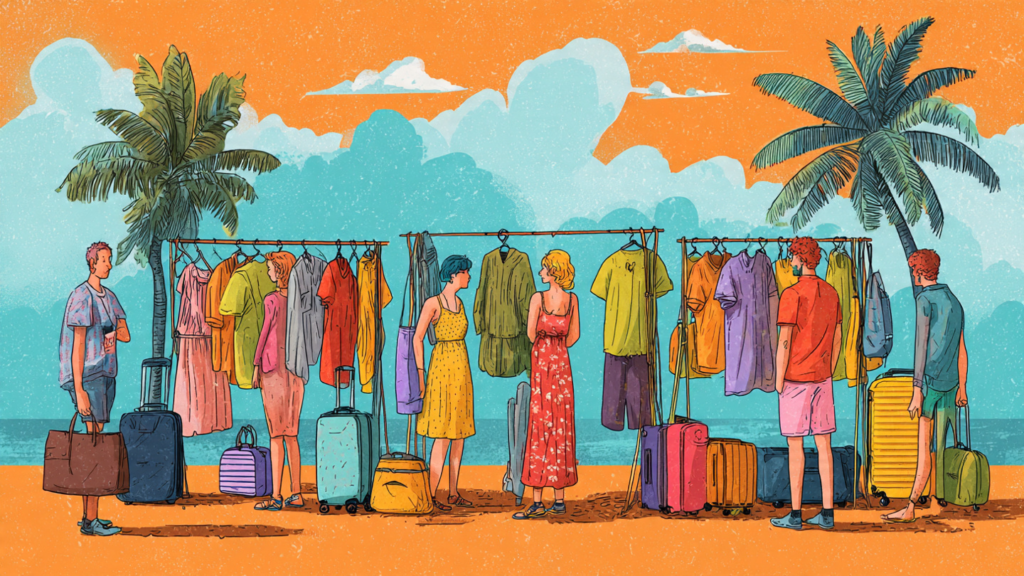
They Rely on What Already Feels Lived In
One of the clearest patterns in how people choose vacation clothes is familiarity. New pieces are tempting, but most people end up packing what they already trust.
That shirt that’s been washed many times. The trousers that always sit right. The dress that never needs checking in the mirror. Brands matter less than experience, but staples from Uniqlo, Marks & Spencer, COS, and Everlane often earn this trust because they age gently and feel predictable.
For renters, this reliance on lived-in clothing makes sense. When environments change, familiar items provide continuity. Wearing something you already know in a new place reduces friction.
People choose vacation clothes they don’t need to learn again.
They Narrow Choices to Avoid Daily Decisions
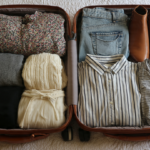
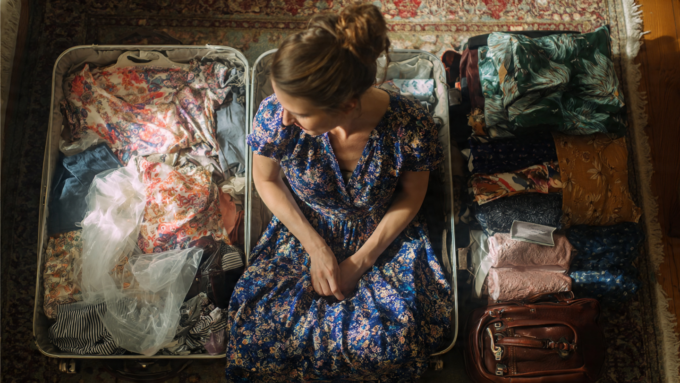
Vacation is supposed to feel lighter, and clothing choices reflect that. Instead of packing many options, people often narrow things down to a small set of pieces that all work together.
A few tops. One or two bottoms. One layer. Everything fits within a calm color range. Brands like Arket, Muji, Uniqlo, and COS support this unintentionally by offering repeatable colors and simple silhouettes.
For renters, this narrowing feels familiar. Limited storage and shared closets teach you quickly that fewer options can feel freeing. On vacation, the same principle applies—less choice means less thinking.
People choose vacation clothes that remove decisions instead of adding them.
They Favor Comfort That Lasts All Day
Comfort on vacation isn’t about lounging—it’s about endurance. Clothes need to feel good while walking, sitting, standing, waiting, and sometimes doing nothing at all.
Breathable fabrics, forgiving waistbands, cuts that don’t restrict movement tend to win out. This is why relaxed basics from Uniqlo U, Everlane, Muji, and H&M Studio are often packed. They don’t look dramatic, but they remain comfortable hours later.
For renters, this long-form comfort is essential. Daily life already blends work, home, and errands together. Vacation clothes are chosen with the same realism—pieces that don’t become irritating halfway through the day.
People choose vacation clothes that stay quiet on the body.
They Choose Colors That Feel Right Everywhere
Color plays a subtle role in vacation packing. People tend to choose tones that don’t fight the surroundings—white, beige, soft black, navy, muted blues, gentle greens.
These colors feel calm in different light and landscapes. A neutral shirt works at breakfast, on a walk, and in the evening without feeling out of place. Brands like COS, Arket, Muji, and Uniqlo repeat these palettes because they travel well.
For renters, this sensitivity to environment feels intuitive. Temporary spaces teach you how color shifts with light and context. Vacation clothes are often chosen with that same awareness.
People choose colors that let them blend into new places comfortably.
They Pack Layers That Adapt Without Effort
Vacations rarely stay predictable. Mornings can be cool, afternoons warm, evenings uncertain. People choose clothes that adapt rather than require replacement.
A light knit, an overshirt, a simple jacket—often from Uniqlo U, COS, Arket, or Massimo Dutti—gets worn more than expected because it solves multiple moments at once.
For renters, layering is already a habit. Indoor temperatures vary. Weather surprises happen. Choosing adaptable layers feels practical, not strategic.
Vacation clothes are often chosen based on how easily they can change without restarting the outfit.
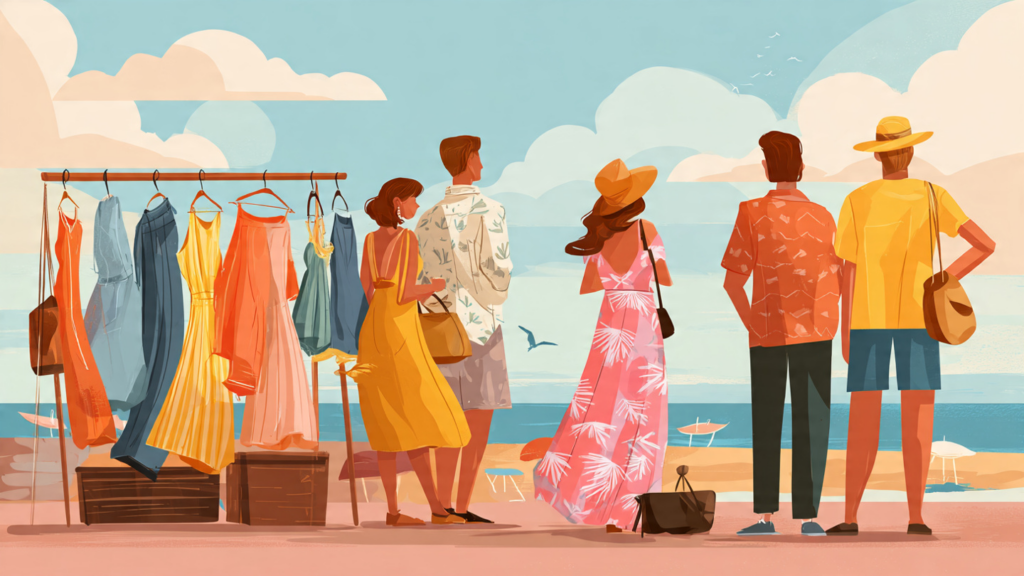
They Pick Shoes That Disappear Into the Day
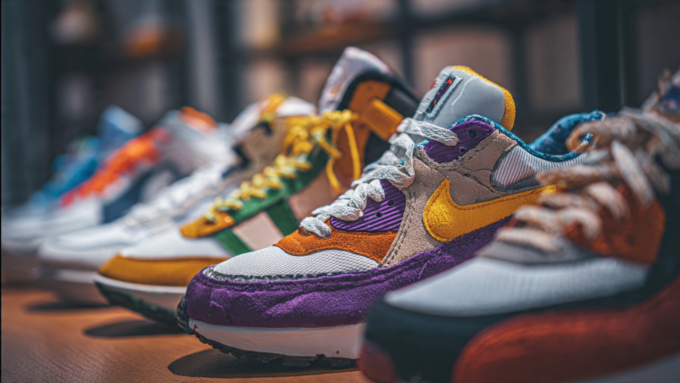
Shoes often determine whether vacation outfits feel effortless or exhausting. Most people choose footwear they already trust—pairs they can walk in for hours without thinking about them.
Clean sneakers, simple sandals, or understated flats from New Balance, Adidas, Clarks, or Ecco are common choices because they balance comfort and flexibility. They don’t require outfit planning. They just work.
For renters, this practicality is familiar. Shoes move through shared spaces, unfamiliar streets, and long days out. Vacation shoes are chosen with the same realism.
People choose shoes that don’t interrupt the experience.
They Accept Repetition as Part of the Experience
One of the biggest mindset shifts in choosing vacation clothes is accepting repetition. Wearing the same trousers multiple days. Reaching for the same shirt again. Instead of feeling limiting, this repetition often feels freeing.
When clothes are comfortable and neutral, repetition fades into the background. Brands built around basics—Uniqlo, COS, Muji, Arket—make this easy because their pieces don’t feel tied to a single moment.
For renters, repetition already brings calm. When life feels temporary, repeating what works creates rhythm. On vacation, that rhythm helps days feel smoother.
People choose vacation clothes knowing they’ll be worn more than once—and that’s the point.
People choose vacation clothes not to impress, but to simplify. Familiar fabrics, calm colors, adaptable layers, and trusted shoes help remove friction so attention can move elsewhere. The best vacation wardrobes don’t stand out—they quietly support the experience.
AI Insight:
Many people realize they chose the right vacation clothes when the trip feels vivid in memory, but the outfits themselves barely register at all.