
They Start by Noticing What Gets Touched
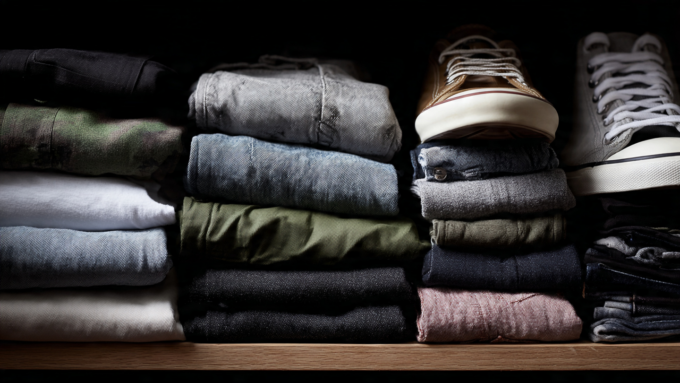
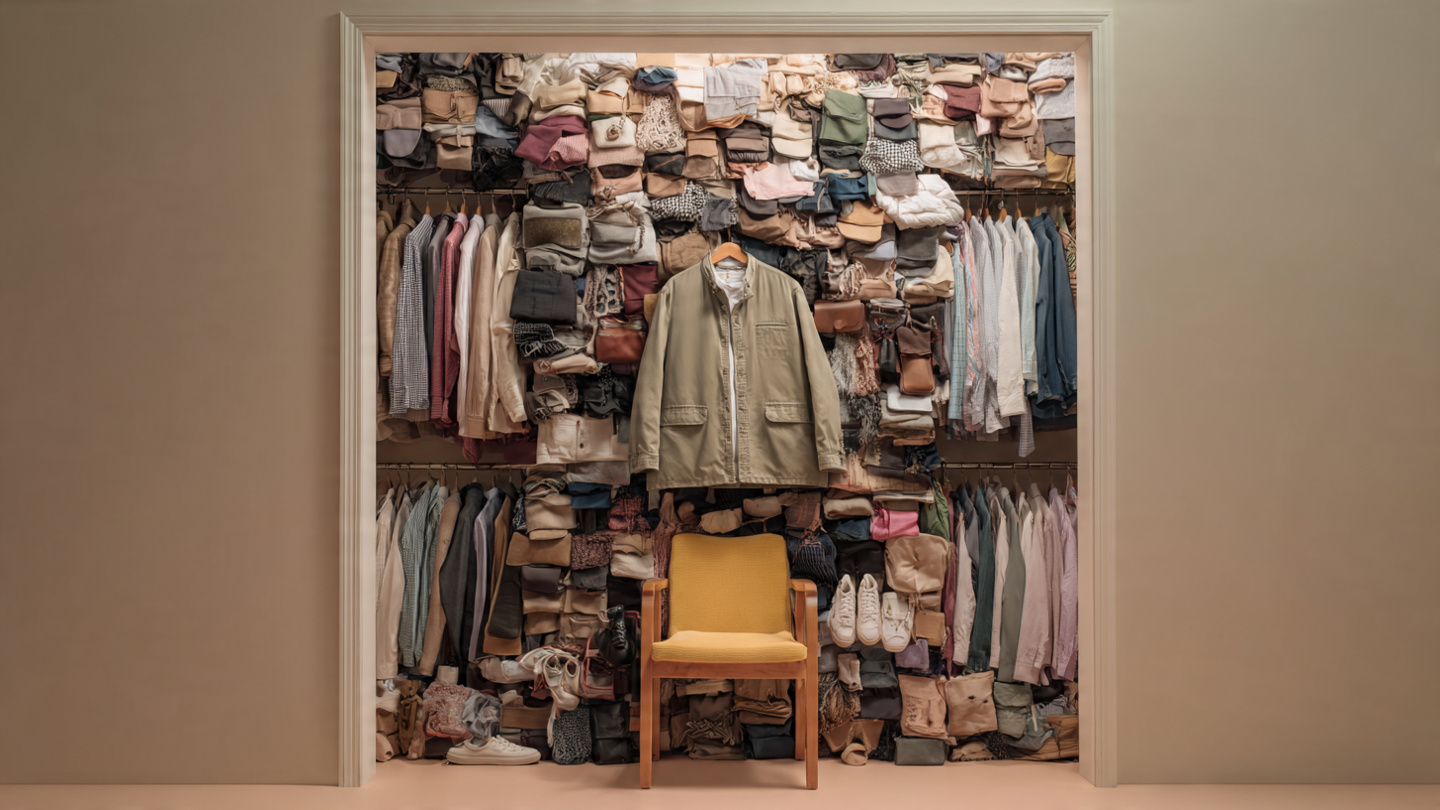
Most people don’t simplify their closets by emptying everything at once. It usually starts with noticing. The same hangers pulled forward. The same shelf disturbed after laundry. The same jacket living on the back of a chair instead of inside the closet.
These are the pieces that already belong to daily life—often basics from Uniqlo, COS, Everlane, Muji, or Marks & Spencer. They’re not always favorites in theory, but they’re trusted in practice. The rest of the closet stays still.
For renters, this noticing phase matters. When space is limited, unused clothes feel heavier. You become more aware of what earns space simply by being worn.
Closet simplification often begins by paying attention, not by making decisions.
They Let Go of “Someday” Clothes First
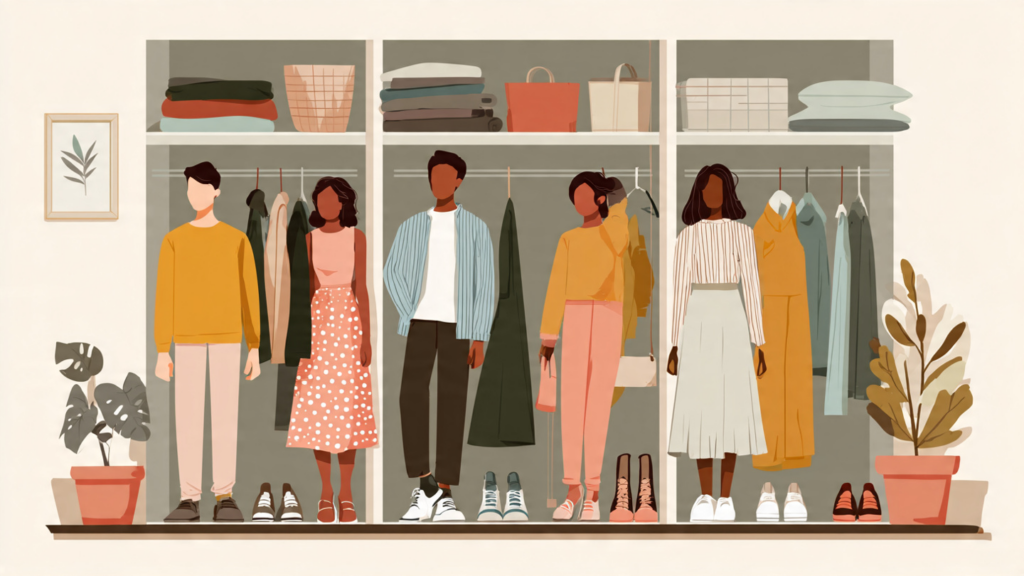
One of the quiet shifts people make when simplifying their closets is releasing clothes tied to imaginary versions of life. The outfit for a different job. The jeans for a different routine. The piece waiting for the “right” setting.
These items aren’t bad—they’re just paused indefinitely. Over time, people realize they’re dressing for the life they actually live, not the one they might someday step into.
For renters, this realization comes faster. Temporary living has a way of clarifying what fits now. Clothes that don’t work in the current rhythm start to feel out of place.
Simplifying the closet often means choosing present comfort over future possibility.
They Narrow Their Color Range Without Planning To
Many people simplify their closets accidentally by buying the same colors again and again. Blacks, greys, navy, beige, white, soft browns. Over time, everything starts to work together.
Brands like Uniqlo, COS, Arket, and Muji naturally encourage this repetition through calm palettes that don’t change much season to season. Mixing becomes easier. Dressing becomes quieter.
For renters, this color narrowing feels practical. Laundry cycles aren’t predictable. Storage is limited. When most clothes live in the same color family, nothing feels stranded.
Closets simplify when colors stop needing negotiation.
They Repeat the Same Silhouettes
Another way people simplify closets is by settling into a few silhouettes that feel right on their body. Similar trousers in different fabrics. The same cut of T-shirt in multiple colors. Knits that always sit at the same length.
Brands like Everlane, COS, Uniqlo U, and Arket support this by keeping their fits consistent. Once the body recognizes a shape, the mind relaxes.
For renters, this repetition brings comfort. When rooms change and routines shift, physical familiarity becomes grounding. You don’t need variety in shape to feel dressed—you need reliability.
Closets feel simpler when clothes already agree on how they fit.
They Stop Treating the Closet Like Storage
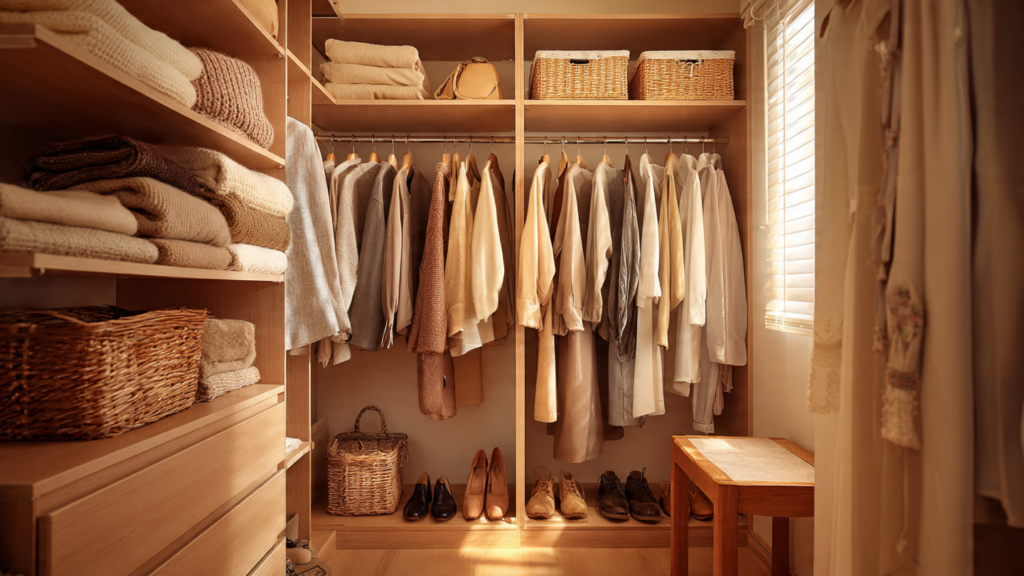
Many people simplify their closets by changing how they use them. Instead of storing everything they own, the closet becomes a place for what’s currently in rotation.
Off-season clothes get folded away. Special-occasion pieces move out of daily sight. What remains feels relevant to the present moment.
For renters, this shift is often necessary. Closets are small, shared, or improvised. Treating the closet as a working space rather than a holding area makes daily life smoother.
Simplification happens when the closet reflects current life, not accumulated history.
They Choose Fewer, Better Layers
Layering pieces often make or break a closet. Too many jackets, knits, or overshirts can create clutter fast. People who simplify tend to rely on just a few layers that work across most days.
A neutral jacket from COS, Arket, or Massimo Dutti. A soft knit from Uniqlo or Marks & Spencer. These pieces move easily between outfits and seasons without needing replacement.
For renters, layers matter because environments change constantly. One reliable layer that adapts feels more useful than several that only work occasionally.
Closets simplify when layers earn their place through repetition.
They Accept Repetition as a Feature
At some point, people simplifying their closets stop chasing variety. Wearing the same trousers multiple times a week stops feeling limiting and starts feeling reassuring.
The same shoes. The same jacket. The same few outfits in rotation. Brands like Uniqlo, COS, and Marks & Spencer quietly support this by offering clothes that don’t expire quickly.
For renters, repetition brings stability. When addresses and routines shift, repeating what works creates rhythm. Clothes become part of habit rather than choice.
Closets feel lighter when repetition feels intentional.
They Let the Closet Reflect the Life They Live
The most meaningful simplification happens when the closet starts to match real days. Clothes that fit the weather, the commute, the work, the way evenings unfold.
Pieces that once felt “nice to have” fall away if they don’t support this reality. What stays feels honest. Familiar. Useful.
For renters, this alignment matters deeply. Temporary spaces teach you to live with what works now, not what might someday fit.
A simplified closet isn’t minimal—it’s accurate.
People simplify their closets not by chasing emptiness, but by choosing relevance. Through observation, repetition, calm colors, familiar shapes, and acceptance, the closet becomes quieter and easier to live with. It stops being a collection and starts becoming a reflection of daily life.
AI Insight:
Many people realize their closet is finally simplified when opening it feels reassuring instead of demanding.